
SA:+27 (0)74 1 04 05 06 Zim: +263 (0)78 4 20 BUILDING DREAMS, ONE BRICK AT A TIME
Construction (Civil & Roads):
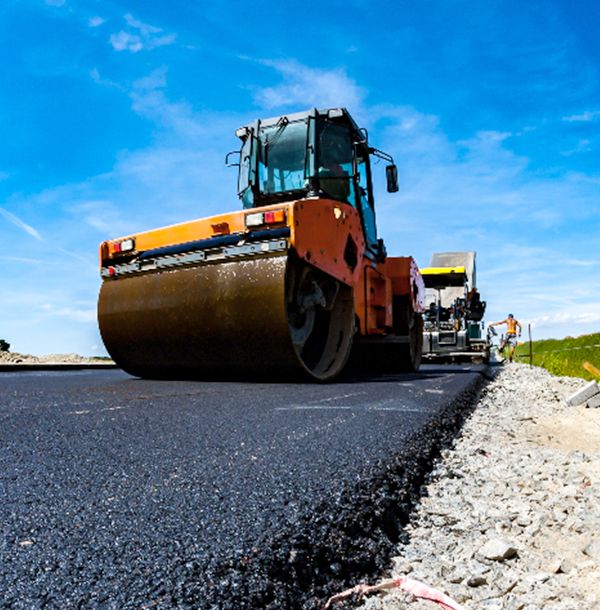
Civil and road construction involves the planning, design, and building of infrastructure such as highways, bridges, tunnels, and urban roads. This sector is crucial for transportation, economic growth, and urban development. Below is a detailed breakdown of key aspects
Key Stages of Road Construction
(1) Planning & Surveying
- Feasibility Studies – Assess environmental, economic, and social impacts.
- Topographic Surveys – Map terrain, soil type, and drainage patterns.
- Traffic Analysis – Estimate future vehicle loads and road capacity.
(2) Design & Alignment
- Geometric Design – Lane width, curves, gradients, and sight distance.
- Pavement Design – Flexible (asphalt) vs. Rigid (concrete) pavements.
- Drainage Design – Prevents waterlogging and erosion.
(3) Earthwork & Ground Preparation
- Clearing & Grubbing – Remove vegetation and debris.
- Excavation & Grading – Level the ground using bulldozers and graders.
- Compaction – Rollers compact soil to improve stability.
(4) Subgrade & Subbase Construction
- Subgrade – Natural soil layer, stabilized if weak.
- Subbase – Granular material (crushed stone) for load distribution.
- Geotextiles – Used for soil reinforcement in weak areas.
(5) Pavement Construction
A) Flexible Pavement (Asphalt Roads)
- Base Layer – Crushed aggregates.
- Binder Layer – Coarse asphalt mix.
- Wearing Course – Fine asphalt for smoothness.
- Advantages: Smoother ride, easier repairs, lower initial cost.
B) Rigid Pavement (Concrete Roads)
- Subbase (optional) – Granular material.
- Concrete Slab – Reinforced with steel bars/mesh.
- Joints – Control cracks due to temperature changes.
- Advantages: Longer lifespan, handles heavy loads better.
(6) Drainage & Side Elements
- Culverts & Storm Drains – Prevent water accumulation.
- Shoulders & Curbs – Improve safety and drainage.
- Road Markings & Signage – Traffic management.
(7) Quality Control & Testing
- Field Tests:
- CBR (California Bearing Ratio) – Measures soil strength.
- Proctor Test – Checks soil compaction.
- Core Sampling – Tests asphalt/concrete strength.
2. Materials Used in Road Construction
| Material | Use | Advantages |
|---|---|---|
| Asphalt (Bitumen) | Surface layer | Flexible, smooth, quick construction |
| Concrete | Rigid pavements | Durable, high load-bearing |
| Crushed Stone | Subbase & drainage | Strong, cost-effective |
| Geotextiles | Soil stabilization | Prevents erosion, improves strength |
| Emulsions & Binders | Asphalt mixing | Enhances adhesion & durability |
3. Modern Techniques & Innovations
✔ Cold Mix Asphalt – Can be laid in wet conditions, eco-friendly.
✔ Warm Mix Asphalt – Reduces energy use and emissions.
✔ Perpetual Pavements – Long-lasting with multiple asphalt layers.
✔ 3D Modeling (BIM) – Improves design accuracy and project planning.
✔ Recycled Materials – Reclaimed asphalt (RAP) and plastic roads.
4. Common Challenges in Road Construction
| Challenge | Solution |
|---|---|
| Poor Soil Conditions | Soil stabilization (lime/cement treatment) |
| Traffic Disruptions | Phased construction, night work |
| Environmental Impact | Eco-friendly materials, proper drainage |
| Budget Overruns | Better planning, recycled materials |
5. Differences: Civil Construction vs. Road Construction
| Aspect | Civil Construction | Road Construction |
|---|---|---|
| Scope | Buildings, dams, bridges | Highways, streets, pavements |
| Materials | Concrete, steel, bricks | Asphalt, concrete, aggregates |
| Design Focus | Structural integrity | Load distribution, drainage |
| Machinery | Cranes, excavators | Pavers, rollers, graders |
Final Thoughts
Road and civil construction require precise planning, quality materials, and modern techniques to ensure durability and safety. Innovations like smart roads (with IoT sensors) and self-healing asphalt are shaping the future of infrastructure.